Fungi: Croft Close Nature Reserve
Here fungi are most evident on dead wood. To date, relatively few large bracket fungi have been recorded, though Beefsteak fungus (Fistulina hepatica), Chicken-of-the-woods (Laetiporus sulphureus) and Artist's bracket (Ganoderma applanatum) have all been noted. At a smaller scale, Bonnets like Nitrous bonnet (Mycena leptocephali) and Clustered bonnet (Mycena inclinata) have occurred.
On the woodland floor two similar fungi, Fleecy milkcap (Lactarius vellereus) and Giant funnel (Leucopaxillus giganteus), can be found.
Fairy Inkcap
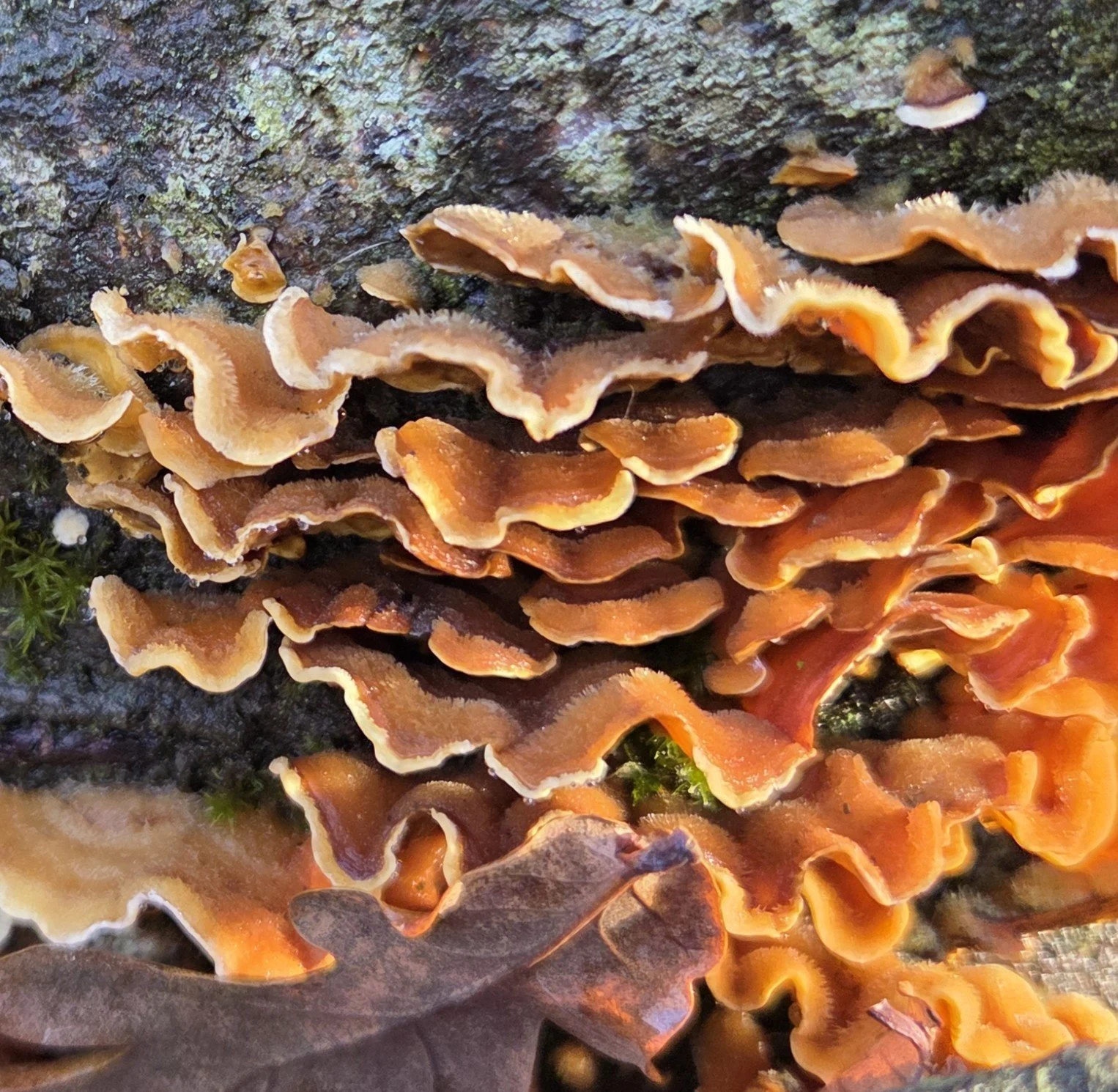
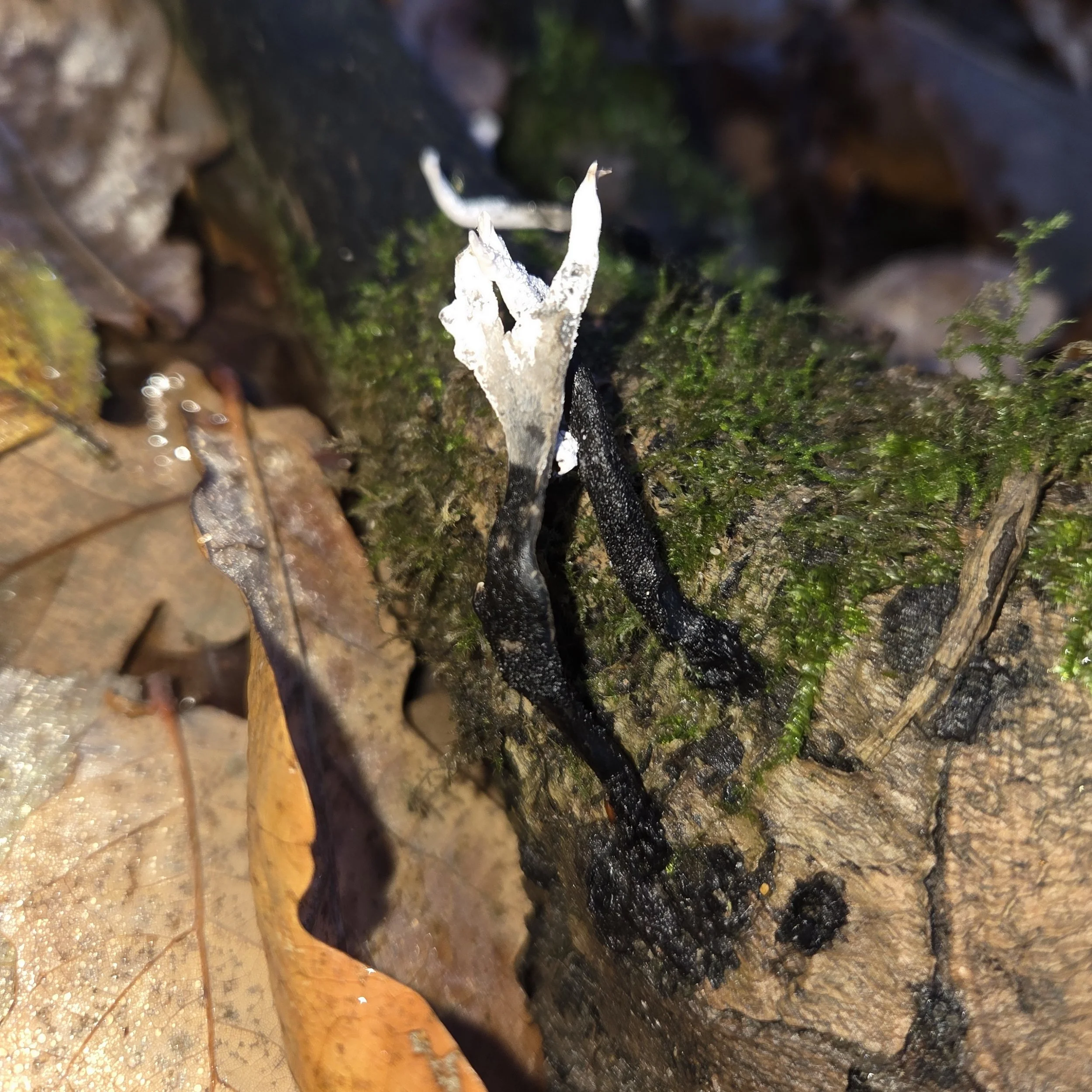
Unsurprisingly Turkeytail (Trametes versicolor) - a common species - is found on dead stumps as is Hairy curtain crust (Stereum hirsutum) and Splitgill (Schizophyllum commune). Both of these last two have a somewhat hairy upper surface. The slightly luminescent Candlesnuff fungus (Xylaria hypoxylon) has also been recorded on dead wood.
A couple of fungi with “jelly” connotations have been found: Jellybaby (Leotia lubrica) beneath a growing oak and Purple jellydisc (Ascocoryne sarcoides) - an early arrival on decaying tree stumps.
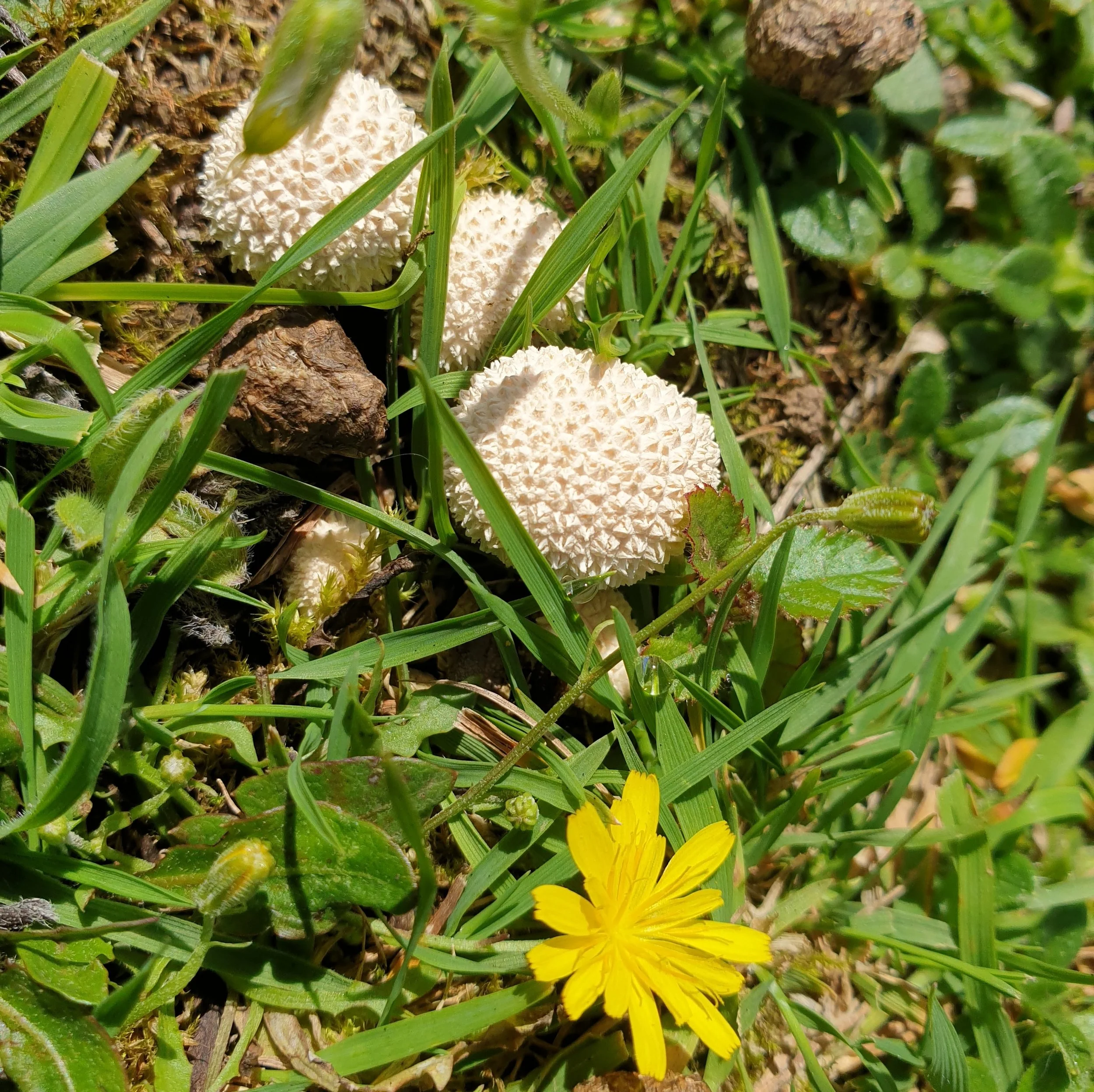
Few fungi are seen in the grassland areas - possibly because their fruiting bodies are soon eaten by the rabbits. But, especially on the woody / scrub boundary, Deceiver (Laccaria laccata) and Common earthball (Scleroderma citrinum) have been found.