
April Nature Hunt Children’s Quiz
Saturday 11th April 2026
on Long Meadow
Want to know more?
This page provides additional information about the wildlife and plants that feature in the quiz, all of which can be found in the villages. This information is intended to provide more for parents and older children to explore, either on-the-fly during the event or at leisure at home. The information is set out by question number, so you can quickly locate extra details if something in the quiz really takes your interest.
There are FOUR questions in the quiz and you can find additional information below:
Question 1: Nests (not just for the birds)
Birds aren’t the only ones to make elaborate homes for themselves. Mammals, reptiles, insects, and even some freshwater fish, do too. But bird nests are the most familiar to us and we have expressions that we use that reflect this like ‘flown the nest’ when children leave home or saving money as a ‘nest egg’ for the future.
At its most basic, it’s a place to keep eggs or young safe. British birds create an astonishing variety of nests, from the untidy pile of sticks precariously balanced among the branches that wood pigeon rely on, to the intricately woven domed nest of long-tailed tits deep in a holly hedge, or the floating waterweed platforms assembled by mute swans.
Not all birds build nests, but those that do use a huge variety of materials, depending on the nesting time, the species and surrounding habitat. They can contain tightly woven twigs, grass or woody stems. Other species use existing nooks and crevices in trees, natural structures or buildings. Nests can be lined with softer or warmer materials such as animal fur, moss, mud or feathers. These materials are usually held together by spider webs, twine-like vegetation or even horsehair.
Nests can be a variety of sizes, depending on the size of the bird, the need to remain hidden and the structural limitations.
The nests can be built by either the male or female, or they can work together. They can take from a few days to a few weeks to build, depending on the size and complexity. Some bird species build a new nest every breeding season but others, such as the rook will use the same nest for many years.
Outside the breeding season some birds may make use of holes and crevices in trees, or our bird boxes, to shelter from extreme winter weather. The smallest of our birds adopt this approach often huddling together in surprisingly large numbers to keep warm overnight. As many as 60 wren have been spotted in a nest box – imagine the squash, especially if you were the first bird in with all the other piling in on top!
We had a display of bird nests and pictures of nest boxes at the event – here they are now with the answers.


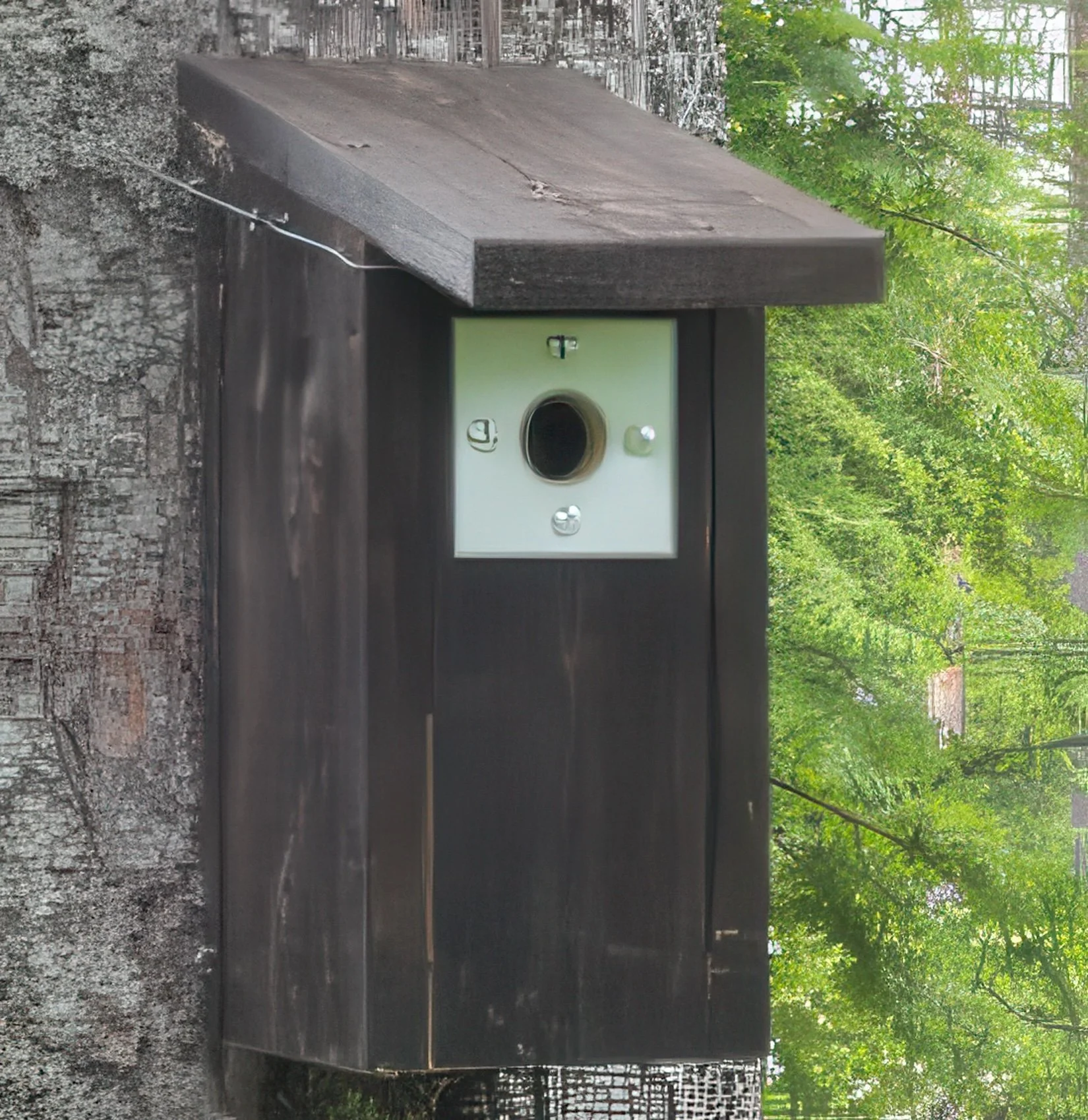
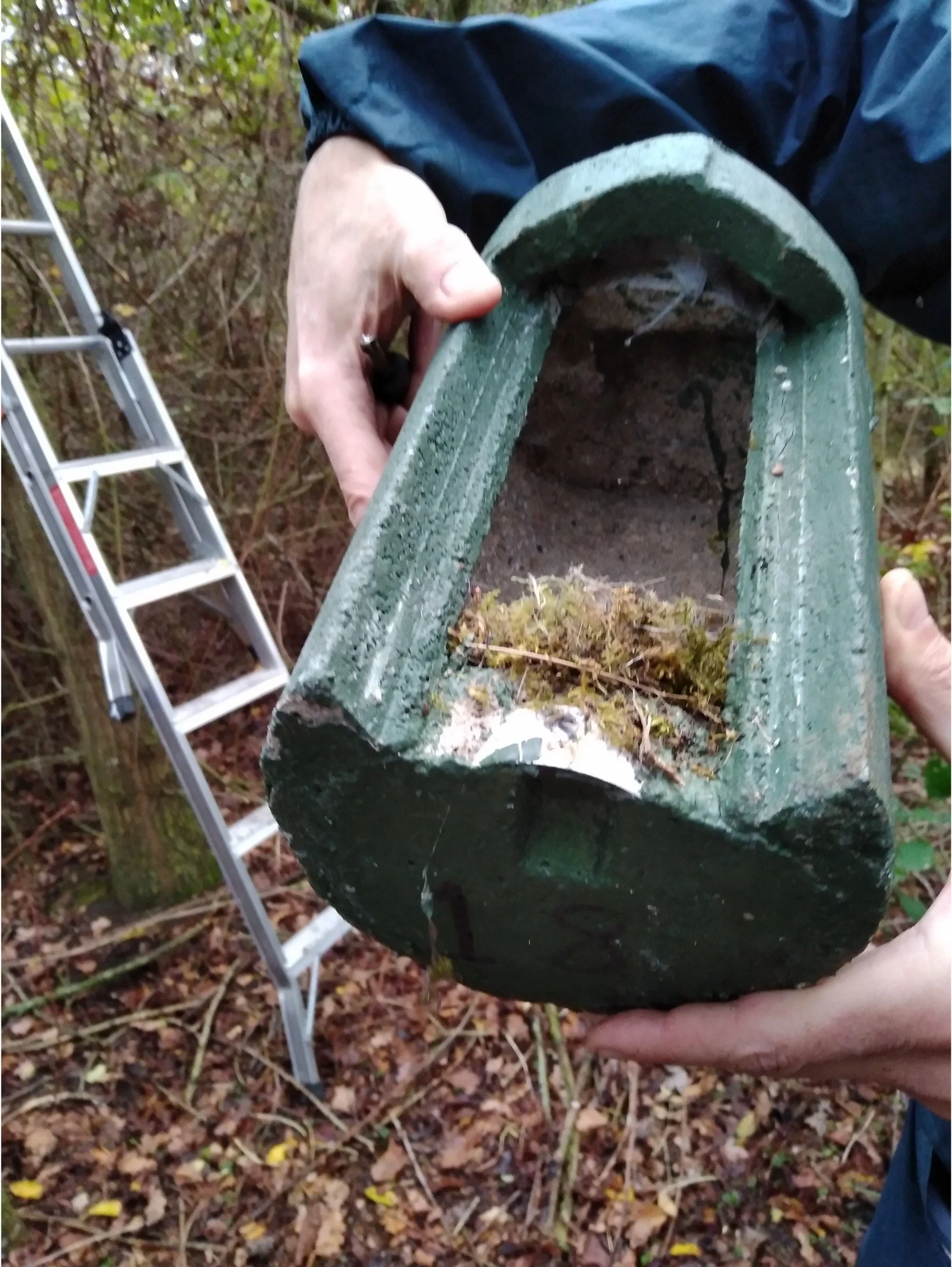


Other nests you may come across
Grey squirrel
A grey squirrel's drey is a made of up a round plait of twigs, often with conifer needles, cones or dead leaves attached. It usually measures 30cm in diameter, but up to 50cm, close to tree trunks or forks in branches. In parts of Histon & Impington we have black squirrels - these are actually grey squirrels, ie the same species.
Hedgehog
Hedgehogs spend the day in cosy nests tucked into the bottom of a hedgerow or among dense undergrowth. They like to curl up in a substantial bed of dry leaves, moss and grass. Our gardens are an increasingly important habitat, and here they will move into custom-made ‘hedgehog houses’, though they are equally happy living under a shed or decking. Hedgehogs hibernate in their nests from November or December to about March.
Mason bee
If you have ever noticed bees buzzing about in front of brick walls, they were likely red mason bees. These bees get their name from their habit of nesting in cavities between brickwork, although they also use wood, hollow stems and provided ‘bee hotels’.
It is a solitary bee so, after mating, each female builds her own nest; she lines each 'cell' with mud and pollen and lays a single egg in each until the cavity is full. The larvae hatch and develop, pupating in autumn and hibernating over winter. The red mason bee is on the wing from late March until June, and feeds solely on pollen and nectar.

Common wasp
This social insect is a valuable pest controller in gardens and fields. It lives in colonies ruled by a queen. The queen wasp starts work in April or May, cutting slivers of wood with her scissor-like mandibles and turning them to papier-mâché, later helped by her army of female workers. Their nest is full of perfectly arranged hexagonal paper cells in which the grubs are raised; by midsummer, up to 10,000 wasps may call this home. Nests are empty by autumn and not reused; next spring, a new generation of queen wasps starts afresh. You may have seen an abandoned wasp nest in the roof of a garden shed or loft.

Question 3: More ways to measure the height of a tree
This activity was designed by Learning through Landscapes and gives instructions for 10 possible ways to measure the height of a tree, including the two simple methods we asked children to try during the April Nature Hunt at Long Meadow. You can download the instructions here.
Question 4: Focus on wildflowers in bloom
Even now we are still learning what wildflowers we have at Long Meadow and Croft Close Nature Reserve and around the rest of the village. We post a seasonal ‘what to look for’ page on our website which gives a flavour of what to expect for a casual visitor.
Whilst many of us are keen to know what plant species we are looking at, this can be daunting. Experts gain experience over many years but now for the curious, casual observer help is at hand with modern technology in the shape of the ubiquitous app.
A word of warning: always treat an app identification with caution. Some apps are very good, but even the best will regularly mis-identify. Nevertheless, they can provide an excellent starting point in narrowing down an identification.
For more general use (on both flora and fauna), if you can photograph a species the free ‘Obsidentify’ app will suggest an identification in real time. It will usually indicate how certain the suggestion is (as a percentage). You can also use it with old photos.
You can also check our Events calendar as we run occasional guided walks led by experts on flora or tree identification.